
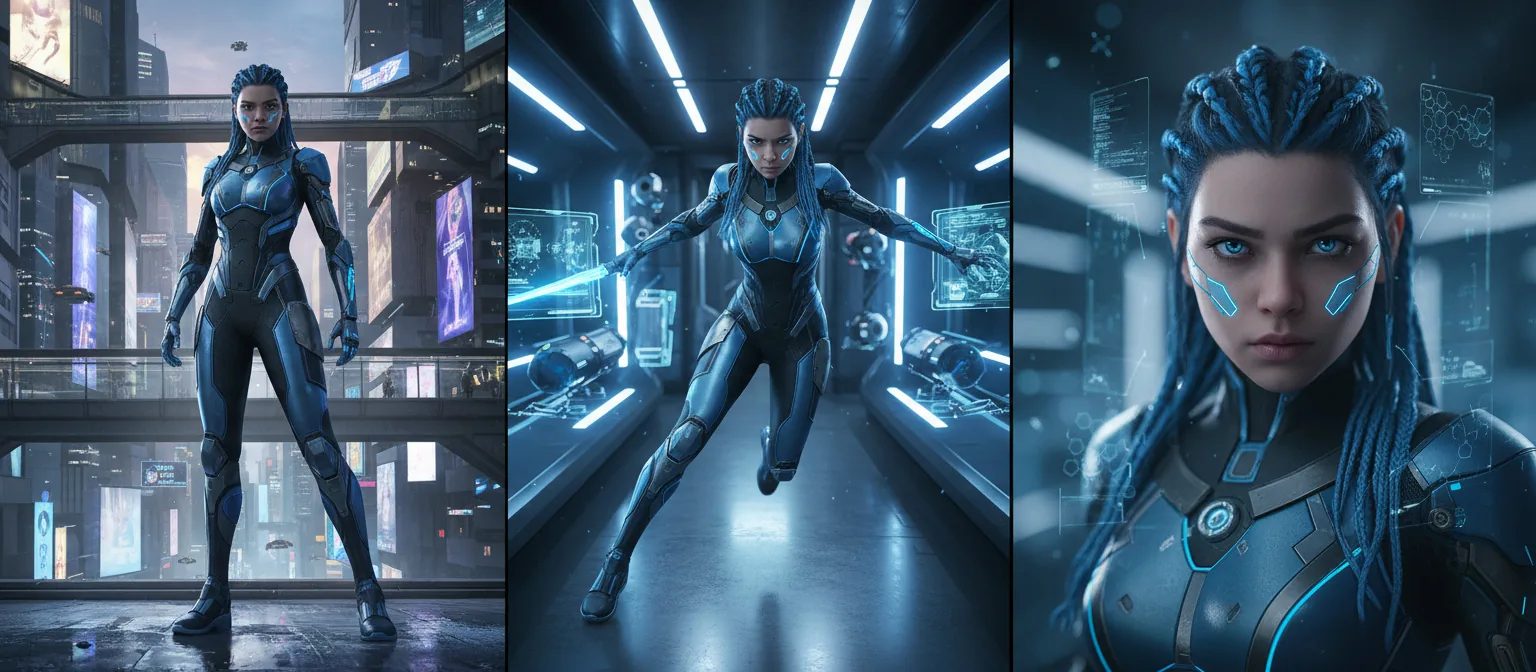
AI Image Generation
The AI Artist’s Dilemma: From Fleeting Faces to Enduring Icons – Unlocking Seamless Character Sagas with Generative AI
Table of Contents
- Introduction
- The Art of Precision Prompting: Guiding AI to Consistent Character Identity
- Advanced AI Tools and Models for Character Continuity
- Post-Generation Refinement: In-painting, Out-painting, and Editing Workflows
- The Picnosia Advantage: Unlocking Commercial Character Sagas with Privacy and Value
- The Future of AI Character Consistency: Latent Space, GANs, and Beyond
- Frequently Asked Questions
- Conclusion
Introduction
Generative AI has transformed visual creation, offering powerful tools to artists and storytellers. These capabilities, driven by advanced Diffusion Models, allow for rapid image generation. Yet, a persistent challenge remains: maintaining character consistency across diverse outputs. Artists and designers often face characters whose appearances subtly shift across different scenes or prompts. This inconsistency can break immersion and complicate narrative flow. Effective Prompt Engineering is essential here, guiding the AI through its complex Latent Space to achieve desired results. Recent research continues to push these boundaries.
This article examines the core dilemma of the AI artist. We discuss practical strategies and advanced tools designed to transform fleeting AI-generated faces into recognizable, enduring characters. Mastering this aspect is essential for creating compelling narratives and visual series. Your AI-driven creations will excel and maintain consistency across their entire saga.
- Leveraging Character Reference (Ref Image) for stable visual anchors.
- Understanding the critical role of Seed Value in maintaining generation coherence.
- Employing powerful tools like ControlNet for precise pose and composition.
- Exploring advanced methods such as Model Fine-tuning and LoRA (Low-Rank Adaptation).
The Art of Precision Prompting: Guiding AI to Consistent Character Identity
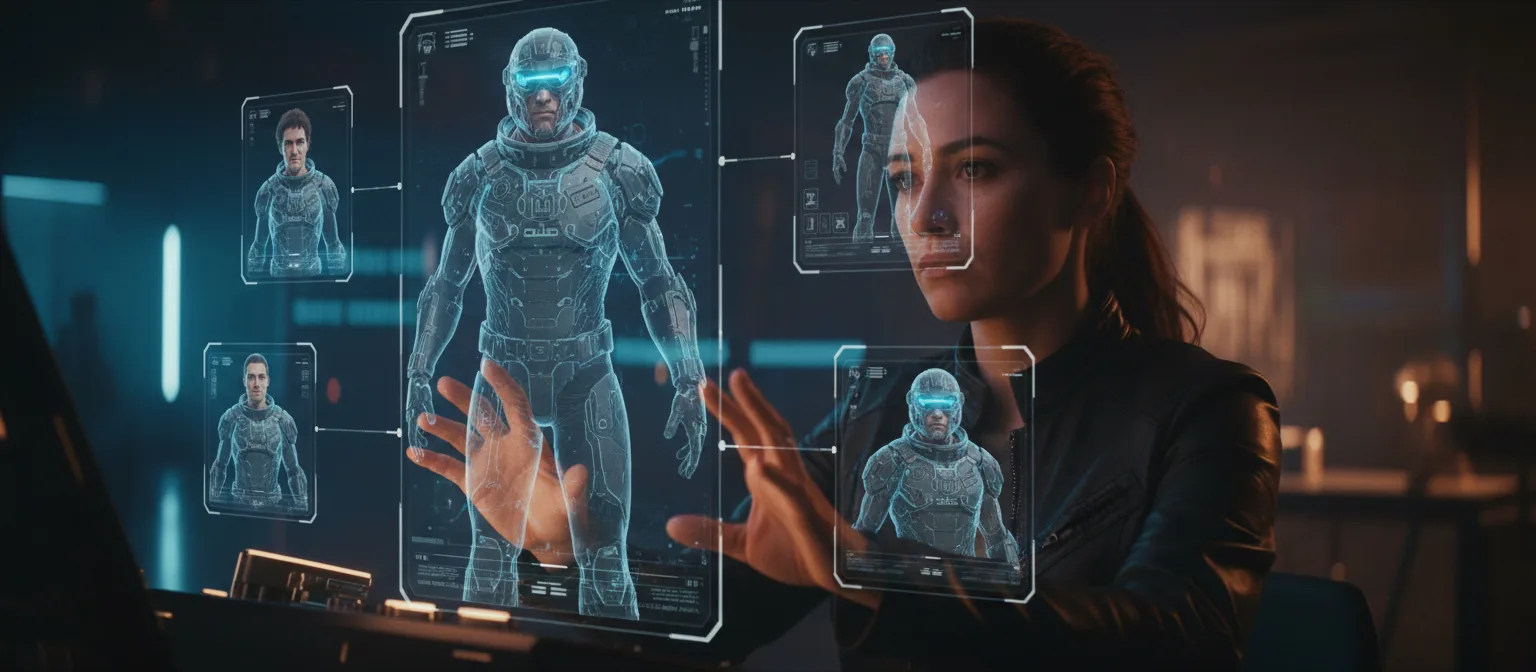
Achieving character consistency across AI-generated visuals starts with meticulous prompt engineering. This crucial process forms the bedrock for all subsequent generations. It builds upon the foundational capabilities of diffusion models, establishing stable visual identities. Without precise guidance, the AI tends to introduce subtle variations. These changes can quickly transform a character into a series of inconsistent faces. Therefore, every detail in your prompts is vital.
To effectively guide the AI through its vast latent space and ensure character fidelity, consider these strategic prompting techniques:
- Detailed Character Descriptions: Start with an exhaustive description. Cover physical attributes, clothing, accessories, and even personality traits.
- Consistent Keywords and Phrasing: Use identical terminology for the character in every prompt. This ensures the AI maintains a stable mental model, reducing visual drift.
- Leverage Seed Values: Generating an initial character with a specific seed value, and reusing it, dramatically improves consistency. This locks in the initial visual interpretation.
- Employ Iterative Prompting: Make small, incremental changes to pose, expression, or environment. Avoid drastic alterations to help the AI retain core identity.
- Utilize Negative Prompts: Steer the AI away from undesirable features. Refine the character’s appearance, eliminating inconsistencies. For more on advanced prompting, explore our guide on crafting perfect AI prompts.
While powerful tools like ControlNet offer great precision in pose and composition, robust and consistent prompting ensures the character remains instantly recognizable. This foundational work complements advanced methods. These include Character Reference (Ref Image), Model Fine-tuning, and LoRA (Low-Rank Adaptation). Together, they set the stage for enduring AI-generated character sagas.
Advanced AI Tools and Models for Character Continuity
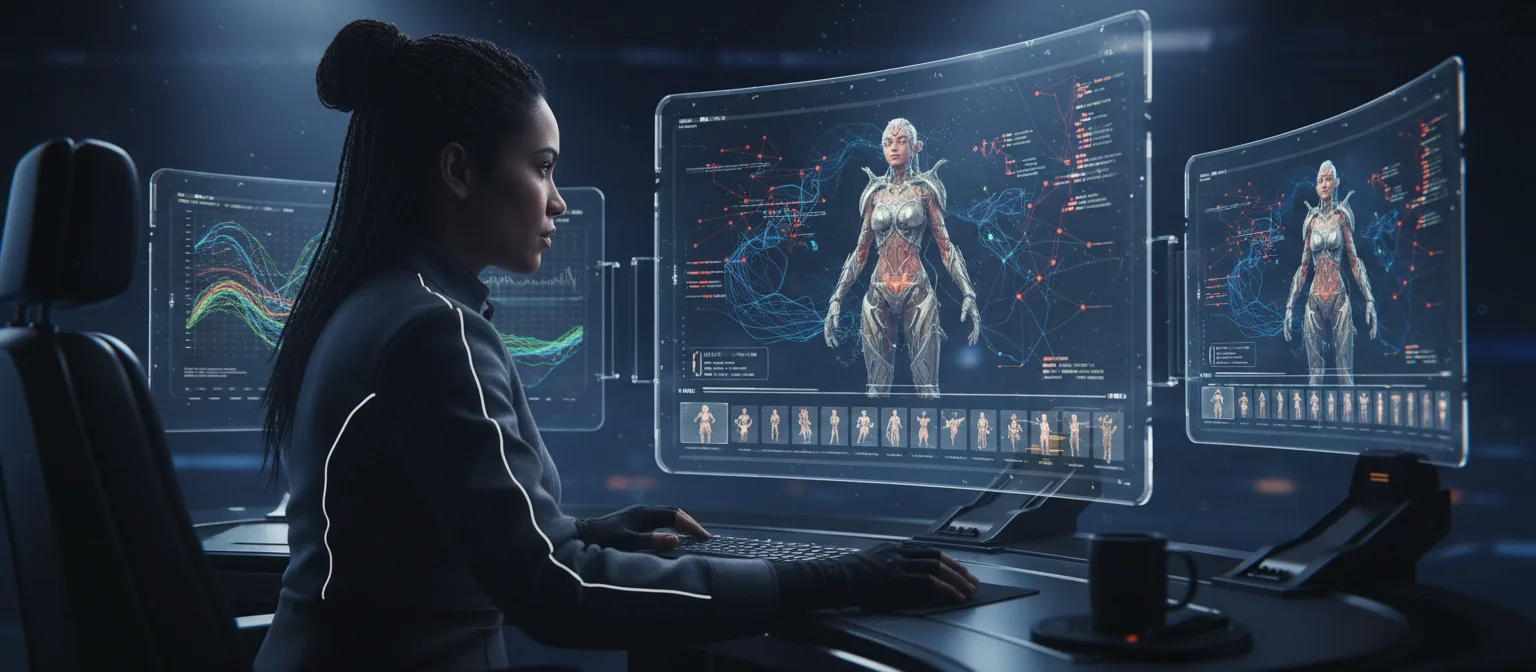
While foundational model fine-tuning and LoRA (Low-Rank Adaptation) offer effective methods for consistent character generation, mastering character continuity demands a closer look into specialized AI tools. These advanced methods move beyond basic prompt engineering, providing granular control over visual elements. They allow creators to embed a character’s essence directly into the generative process, ensuring their identity remains intact across diverse scenes and narratives.
Leveraging Reference-Based Generation
Specialized AI tools enable artists to guide image generation with great precision. They connect abstract textual prompts with concrete visual outcomes, ensuring character details remain consistent.
- ControlNet is a transformative tool for maintaining specific poses, intricate depth, or structural elements. It guides the AI to precisely replicate character posture and scene composition from a reference image. This ensures your character stands, moves, and interacts consistently, scene after scene.
- Many modern platforms now offer direct Character Reference (Ref Image) or “image-to-image” features. Users can upload a base image of their character. The AI extracts key visual traits and applies them to new generations. This method streamlines the process of maintaining a consistent visual identity.
- These techniques extend beyond simple prompting, allowing for nuanced adjustments. Tools like In-painting/Out-painting further enhance control. Artists can refine specific areas within an image or seamlessly extend its boundaries, all while preserving the character’s established appearance. This is highly useful for correcting minor inconsistencies or adapting characters to new environments without full regeneration.
Deep Customization with Model Adaptation
For projects requiring extensive narrative depth, embedding a character’s identity directly into the AI model is essential. This level of customization ensures a truly unique and enduring presence.
- LoRA (Low-Rank Adaptation) models represent a highly efficient approach. They allow users to fine-tune AI models on a small, curated dataset of their specific character. This process creates a highly personalized and consistent character style. It captures subtle nuances that text prompts alone might miss. It is ideal for developing unique character archetypes that resonate across an entire series.
- For the deepest customization, full model fine-tuning is the most comprehensive approach. This involves training a generative model, often based on Diffusion Models, on an extensive collection of a specific character’s visuals. This embeds the character’s identity directly into the model’s latent space. They become a native part of its generative capabilities. This method is perfect for extensive narrative projects where the character’s appearance must be flawless and unwavering.
These advanced techniques enable professional art directors to achieve high-fidelity AI visuals consistently. They move beyond the limitations of single-image generations, enabling the creation of entire visual sagas. While Generative Adversarial Networks (GANs) historically offered character generation, current advancements in diffusion-based models, combined with these specialized tools, now provide enhanced control and consistency for narrative-driven visual projects.
Post-Generation Refinement: In-painting, Out-painting, and Editing Workflows
Even with the sophisticated control offered by advanced AI generation techniques, minor visual inconsistencies can sometimes emerge. The journey from fleeting AI-generated faces to truly enduring character icons requires a final stage: careful post-generation editing. This phase ensures every visual element aligns perfectly with your narrative vision.
Precision Adjustments with In-painting and Out-painting
The power of generative AI extends beyond initial image creation. Tools like In-painting allow artists to selectively modify small areas within an existing image. This is ideal for correcting a character’s eye color, tidying a stray hair, or refining a clothing detail that wasn’t quite right in the initial output. It offers granular control, ensuring every pixel contributes to the overall consistency.
Conversely, Out-painting provides the ability to expand the canvas beyond the original image boundaries. This technique smoothly integrates your consistent character into new, larger environments or extends existing scenes. Imagine expanding a portrait into a full-body shot, or placing your character into a broader landscape. These methods build upon the foundational work of Diffusion Models and precise Prompt Engineering, allowing for iterative improvements without starting anew.
These techniques are highly useful for maintaining visual integrity across a series of images. They address subtle shifts in a character’s appearance, ensuring they remain recognizable and true to their established identity throughout an entire visual saga. This iterative refinement process is key to overcoming the inherent variability of the Latent Space where AI generates its visuals.
Integrating Traditional Editing for a Polished Finish
While AI tools handle much of the heavy lifting, traditional image editing software remains essential. Programs like Adobe Photoshop or Affinity Photo are important for final touches. They enable professional color grading, sophisticated compositing, and detailed retouching. Integrating these tools ensures that AI-generated visuals achieve a polished, high-quality look, indistinguishable from traditionally created art. This hybrid workflow leverages the strengths of both AI and human artistic expertise.
For more information on advanced image editing techniques, explore resources like Adobe’s guides on image editing.
Streamlining Your Character Consistency Workflow
Achieving seamless character sagas with generative AI requires more than just advanced tools; it demands a structured workflow. An important step involves developing a comprehensive character sheet. This document contains key visual references, including various angles, expressions, and costume details. It serves as a highly useful guide for both initial AI generation—often leveraging Character Reference (Ref Image) capabilities—and subsequent manual post-production adjustments. Establishing clear guidelines helps maintain coherence.
A streamlined workflow should include dedicated review and adjustment phases. This systematic approach ensures that every frame, every scene, and every visual asset maintains narrative and character coherence. It mitigates the risk of minor inconsistencies accumulating, which could otherwise undermine the viewer’s immersion. This careful process transforms raw AI output into a cohesive and compelling visual story.
- Develop detailed character sheets: Essential for consistent visual guidelines.
- Utilize iterative refinement: Apply In-painting and Out-painting for precise adjustments.
- Integrate professional editing software: For color grading, compositing, and final polish.
- Implement review cycles: Ensure every visual maintains narrative and character coherence.
The Picnosia Advantage: Unlocking Commercial Character Sagas with Privacy and Value
For creative professionals building commercial character sagas, choosing the right platform is important. Factors like privacy and cost-effectiveness significantly impact long-term success. After refining your AI-generated visuals through advanced editing workflows, protecting your proprietary designs is the next step. This ensures your unique artistic vision remains protected.
Picnosia offers strong privacy for all commercial users. This commitment safeguards your intellectual property and ensures proprietary character designs remain confidential. The platform also provides an integrated workflow with both advanced image and video generation capabilities. This comprehensive approach means you won’t need separate subscriptions for video tools. By consolidating your creative workflow, you save time and resources.
Consider the value proposition:
- Unlike competitors such as Midjourney, which requires a higher-tier plan for private generation, our PRO tier includes this necessary privacy and a Licence Commerciale for a significantly lower monthly fee.
- This integration eliminates the need for additional video tools. Users can realize significant monthly savings while consolidating their creative workflow onto a single, powerful solution.
- Our flexible, token-based pricing model ensures you pay precisely for the value you consume. This offers great efficiency and control over your budget.
The platform empowers visual creators with its private studio, creating an environment where creativity thrives without technical hurdles. Explore how this private studio empowers creators. The ability to generate stunning visuals without technical expertise, combined with robust privacy, makes our solution ideal. It supports commercial photography workflows and allows for deep customization, leveraging concepts like advanced image generation.
Our system facilitates the creation of a cohesive brand visual identity, ensuring every character resonates with your audience. Furthermore, the platform’s advanced features, including those for total commercial rights for video, are built upon sophisticated generative models. These models often involve advanced Generative Adversarial Networks (GANs). These allow for nuanced control over character attributes, crucial for maintaining consistency across various media.
The Future of AI Character Consistency: Latent Space, GANs, and Beyond
Building on the nuanced control over character attributes that models like Generative Adversarial Networks (GANs) offer, the journey towards truly consistent AI-generated visuals continues. Understanding the underlying AI technologies provides critical insight into current limitations and future possibilities for character consistency. This foundational knowledge empowers artists to push boundaries.
Evolving Diffusion Models and the Latent Space Frontier
At the heart of many modern image generators are Diffusion Models. These models operate by gradually adding noise to an image and then learning to reverse this process, effectively creating images from noise. The latent space of these models is where character features are encoded. Navigating this complex space consistently is paramount for stable outputs across different generations. Continuous advancements in diffusion models are making character embedding more robust. This leads to more predictable and consistent generations, even for subtle details. Techniques like Model Fine-tuning and LoRA (Low-Rank Adaptation) are already enhancing this process. Creators can imbue models with specific character traits, ensuring a stronger identity.
These advancements promise a future where character identity is ingrained more deeply than ever before. Artists will soon benefit from:
- More stable character features across diverse scenes.
- Improved preservation of intricate details with fewer artifacts.
- Greater control over stylistic elements and expressions.
The Enduring Potential of Generative Adversarial Networks (GANs)
While diffusion models dominate mainstream image generation, Generative Adversarial Networks (GANs) still hold significant potential for highly controlled and consistent character synthesis. GANs, with their generator-discriminator architecture, excel at learning intricate data distributions. They are adept at producing extremely realistic and specific outputs. Their ability to generate images from a fixed input vector offers a path towards great consistency. This is especially true for generating variations of a single character while preserving core identity. Research in this area continues to refine their capacity for precise character control.
Overcoming Current Hurdles in Character Generation
Despite rapid progress, current AI systems face specific challenges in maintaining perfect character consistency. These include difficulties with extreme pose changes, where a character’s anatomy or proportions might subtly shift. Dynamic lighting shifts can also break consistency, altering perceived facial structure or color palette. Highly nuanced facial expressions remain a hurdle too. Subtle emotions are hard to reproduce identically across different frames. These factors collectively illustrate that while tools like ControlNet and Character Reference (Ref Image) significantly help, the AI still grapples with certain degrees of variability. The role of the initial Seed Value is critical here, but even with fixed seeds, complexity can introduce inconsistencies.
Pioneering the Next Generation of AI Character Sagas
The future prospects for AI character consistency are very promising. We anticipate real-time character animation becoming a standard feature. This would allow artists to generate animated sequences with smooth character continuity. Advanced neural rendering techniques will further refine visual fidelity and consistency across varying conditions. More intuitive interfaces for character sheet creation and embedding are also on the horizon. These tools will allow artists to define and manage character identities with unprecedented ease. This promises high-fidelity consistency, transforming how stories are told and characters are brought to life through generative AI. The integration of more sophisticated character management systems will be key.
Frequently Asked Questions
As generative AI evolves, artists often seek clarity on achieving character consistency. Here are concise answers to common inquiries about this crucial aspect of AI-generated visuals.
What are the most effective prompting techniques to ensure character consistency across a series of AI-generated images?
Effective Prompt Engineering requires detailed character descriptions and consistent keywords. Reusing the exact Seed Value across generations also significantly aids visual coherence and identity.
Which AI image generation platforms or models offer the best features and tools for maintaining a consistent character’s appearance?
Platforms leveraging advanced generative architectures, often supporting LoRA (Low-Rank Adaptation) or Model Fine-tuning, are ideal. These enable training specific character styles for superior visual fidelity across series.
How can I leverage reference images, ‘character sheets,’ or LoRA models to guide AI models for consistent character outputs?
Utilize a dedicated Character Reference (Ref Image), often with ControlNet, to guide composition. Custom adaptations of existing models can embed character identity directly into the AI’s Latent Space for reliable outputs.
What post-generation editing or ‘in-painting’ strategies can effectively fix minor inconsistencies in AI-generated characters?
In-painting/Out-painting are crucial for targeted refinements. In-painting allows precise regeneration of specific image areas, correcting minor facial or attire discrepancies directly.
What are the current limitations and future prospects for achieving perfect, cinematic-level character consistency with generative AI?
Current limitations include subtle inconsistencies in complex expressions. Future advancements in underlying generative frameworks and the potential of Generative Adversarial Networks (GANs) promise near-cinematic consistency.
Conclusion
Mastering character consistency in AI-generated visuals is an important advancement for digital creators. It requires a comprehensive approach:
- Strategic Prompt Engineering and detailed descriptions.
- Leveraging advanced AI tools like Diffusion Models, ControlNet, and LoRA (Low-Rank Adaptation).
- Meticulous post-production, including In-painting/Out-painting for precision.
This blend allows artists to transcend fleeting faces, creating enduring characters for compelling narratives. Techniques involving a deep understanding of the Latent Space are essential. Careful use of Seed Value and effective Model Fine-tuning with a strong Character Reference (Ref Image) also proves important. Future advancements, especially in Generative Adversarial Networks (GANs), promise even greater consistency.
Picnosia offers a complete solution. It provides the necessary tools for consistent character creation, alongside privacy, commercial rights, and cost-efficiency. These are crucial for professional creative endeavors. Embrace the future of AI-driven storytelling. Transform your creative visions into seamless, iconic character sagas today.